
exchange for AI agents
The rapid evolution of artificial intelligence has given rise to new digital economies, including platforms where AI services can be bought, sold, or shared. In this context, a common question arises: Are AI marketplaces the same as an exchange for AI agents? While these two concepts are closely related, they are not identical. Each represents a distinct model for facilitating interactions between AI technologies and their users or counterparts. Understanding the differences is essential for grasping how future ecosystems of intelligent systems will function.
AI marketplaces are generally designed for human users to access AI models, APIs, and data sets. These platforms operate much like an app store or software marketplace, where developers list their AI solutions and customers browse through options, read reviews, compare features, and make purchases or subscriptions. The transactions are typically initiated and managed by humans, even though the end result might be the deployment of an automated system. AI marketplaces are focused on accessibility, ease of integration, and monetization of AI tools by developers, with emphasis on user-friendly interfaces and support documentation.
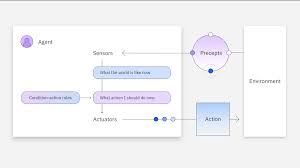
In contrast, an exchange for AI agents is a platform specifically designed for autonomous AI agents to interact directly with one another. These agents are not just tools or services—they are decision-making entities capable of negotiating terms, evaluating offers, and executing transactions on their own. The key difference lies in the level of autonomy and the nature of participation. In an exchange for AI agents, the entities themselves actively engage in economic activity without needing human intervention for each decision. This creates a dynamic, self-operating system that functions continuously, adjusting to supply, demand, and contextual parameters in real time.
Are AI marketplaces the same as an exchange for AI agents?
One major implication of this difference is the speed and complexity of transactions. In AI marketplaces, the pace is limited by human decision-making, evaluation, and approvals. In an exchange for AI agents, decisions can occur in milliseconds, with agents rapidly comparing options and executing tasks based on predefined utility functions or learned preferences. This makes exchanges more suitable for applications requiring real-time responses, such as algorithmic trading, distributed sensing, or decentralized control systems.
Another difference lies in infrastructure and protocol requirements. AI marketplaces typically focus on providing secure payment gateways, licensing mechanisms, and customer service. Meanwhile, an exchange for AI agents requires standards for agent communication, reputation systems, automated contracting (often via smart contracts), and possibly decentralized governance. These technical and ethical underpinnings ensure that the agents can interact in a reliable and trustworthy manner, forming a functional digital economy independent of human input.
Although AI marketplaces and an exchange for AI agents may sometimes appear to overlap, especially when automated purchasing or agent-based service discovery is involved, their core operational philosophies are distinct. Marketplaces cater to humans acquiring AI capabilities, while exchanges are structured for autonomous agents transacting with each other. In the future, it is likely that both systems will coexist and even interconnect, with AI agents participating in human-centered marketplaces and vice versa. However, the distinction remains important when designing systems, regulations, and standards for these emerging AI ecosystems.



+ There are no comments
Add yours