
pcb circuit board
Printed circuit boards are crucial for the operation of electronic devices, including those used in automobiles. They provide the means to connect and transmit signals from various components within a car or truck, such as power control units, audio-visual media players, and traction control systems. These boards also help maintain a vehicle’s engine and fuel systems. They are designed to withstand the harsh environments found in vehicles, such as high temperatures, vibrations, and moisture. These boards also need to be able to handle large currents.
The automotive PCB market is growing rapidly due to the demand for new and innovative technology. This includes self-driving cars, which require advanced electronics. The market is expected to grow even more in the future as more and more people will choose to buy electric and hybrid cars.
Automotive pcb circuit board must be able to withstand the conditions inside a vehicle, such as high temperatures, vibrations, humidity, and large currents. This requires the use of high-quality copper and soldering methods. It is also important to consider signal integrity and electromagnetic compatibility when designing the layout. The design process should involve methods like IBIS modeling, thermal simulation, and optimization of trace dimensions and routing. In addition, it is necessary to ensure that the board can withstand environmental tests like temperature cycling and thermal shock.
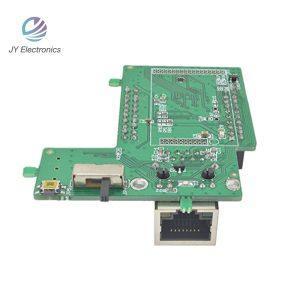
Can pcb circuit board be used in automotive applications?
To ensure the safety of passengers, automotive PCBs must be designed from the start to meet certain requirements. This includes meeting the standards of automotive electronics, such as AEC-Q100 and ISO/TS 16949, as well as passing tests for electrical performance and reliability. The PCB must also be able to resist corrosion and other contaminants that could affect the function of the device.
The main types of PCBs used in automobiles are flexible, rigid-flex, and metal-substrate. The most common is a flexible PCB, which has a flexible base 0.1-0.5 mm thick that can bend and work for kinks. The substrate is made of a dielectric composite material with an epoxy resin and a reinforcement, such as fiberglass, woven or nonwoven fabrics, or glass fibers. The bare laminate is then coated with a photosensitive film and exposed to light through a mask. The image is then developed to remove the unexposed area, which makes it possible for the conductive copper traces to bond with the surface of the laminate.
Rigid-flex PCBs are made of rigid and flexible layers and are often used in automotive LED lighting systems. They are also commonly used in vehicle navigation, digital displays, and radar systems. Metal-substrate PCBs have a metallic base that is normally made of aluminum or copper. These PCBs are used in the most demanding applications, such as automotive sensors and mmWave radar.
The most challenging aspect of designing automotive PCBs is ensuring that all electrical characteristics are taken into account, particularly when laying out the wiring. To do this, the designer uses software such as DRC (Design Rule Check), which checks for places where the wiring does not comply with the design rules set in by the customer. If these errors are not caught in the early stages, they can lead to failure of the finished product.



+ There are no comments
Add yours