
Components of Board Assembly
Board assembly is the intricate and crucial step in the production of electronic devices that brings together all the components required to function as an entire system. As such, the quality of board assembly plays a major role in the overall performance and reliability of electronic products. To ensure the highest quality, the industry adheres to a number of strict standards relating to component sourcing and use, soldering techniques, and cleanliness and overall manufacturing practices.
The key components of board assembly include a variety of circuit chips, capacitors, diodes, resistors, transistors, and integrated circuits. Each component is designed to perform a specific function, and the proper placement of these components is crucial for creating a functional printed circuit board.
Before beginning the assembly process, the printed circuit board is inspected for any defects or irregularities that could potentially impact the integrity of the final product. This inspection can be conducted through visual examination, testing for continuity, and a full electrical and functional test of the circuit boards. Once all defective or irregular components are identified, they must be removed from the production line and replaced with higher-quality replacements.
Once all necessary components are in place, the circuit board undergoes a reflow soldering process to create the essential connections between them and the rest of the PCB. During this process, the circuit board is heated in a controlled environment (typically a reflow oven) to melt the solder paste and fuse it with the copper pads on the surface of the printed circuit board. The reflow process also helps to remove any oxidation or contaminants from the area and promote strong and reliable solder joints.
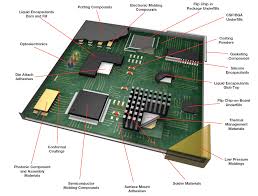
Key Components of Board Assembly
In addition to the reflow soldering process, the assembly may require other finishing steps, such as solder masking or conformal coating, depending on the design requirements of the final product. For example, if the assembly is intended to be used in an outdoor environment, a conformal coating is applied to the circuit board to protect it from moisture and dust.
In order to maintain high-quality assemblies, the manufacturing process of board assembly is continually evolving toward greater efficiency and precision. In particular, the integration of advanced automation technologies into the component placement and reflow soldering processes has reduced the margin for error while accelerating production timelines. Additionally, advances in reflow oven technology have enabled for more precise temperature control and joint formation, resulting in improved reliability and durability.
This initial stage involves designing the circuit layout using CAD (Computer-Aided Design) software. Engineers create a schematic diagram that outlines the placement and connection of various components. Choosing the right materials for the PCB, including the substrate (usually made of fiberglass or plastic) and the copper layer that will form the conductive pathways.
In modern electronics, most components are mounted using SMT, where components are placed directly onto the surface of the PCB. Automated machines, called pick-and-place machines, accurately position components like resistors, capacitors, and integrated circuits. Though less common now, THT involves inserting component leads through pre-drilled holes in the PCB and soldering them on the opposite side. This method is used for components that require stronger mechanical bonds, such as connectors.



+ There are no comments
Add yours